
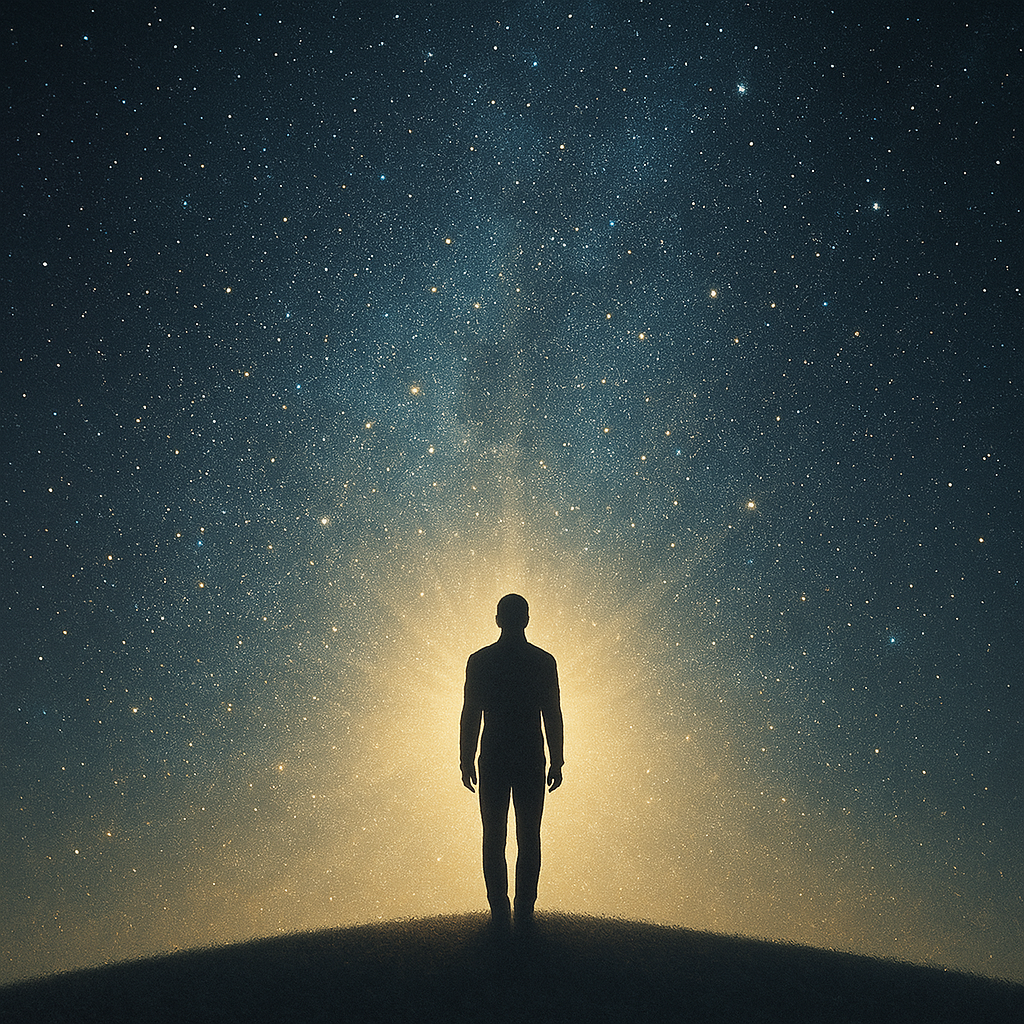
What Is Life? Where Does Living Come From?
Life… A mystery we experience every day yet struggle to explain. Vitality, aliveness, existence… all true, but none capture the full depth of the word “life.” The reason is simple: how life could emerge from non-living matter has never been definitively explained by science, philosophy, or any other field of knowledge.
Science has pursued this question for many years. Theories such as abiogenesis, panspermia, and autotrophic origins have been proposed. Countless laboratory experiments have been conducted. Yet none of these hypotheses have conclusively demonstrated how life truly began.
This uncertainty has led some thinkers to raise even more questions. Tolstoy is particularly sharp in his criticism:
“None are more confused in grasping the essence and true meaning of religion, morality, and life than scientists... Even though modern science achieves real material success within its own field, when it comes to human life it becomes not only unnecessary but sometimes even harmful. That is why I believe the relationship between humanity and the universe can be established not by science or philosophy, but only by religion.”
(Tolstoy, What Is Religion?, p. 82)
Tolstoy implies that science may decode material reality, but when it approaches the essence of life, its language becomes insufficient.
Life: A Reality Humans Cannot Produce
Livingness is not something that originates from within a being itself. No creature “produces” life from nothing. Life is a gift granted from outside. Hundreds of seemingly impossible conditions come together in perfect harmony, and only then does life emerge.
Some questions don’t need answers — just space.
Ask yoursA heart beginning to beat…
A seed pushing upward from darkness to light…
A newborn taking its first breath…
None of these occur “by themselves.” Each is a sign of a truth bestowed upon all living things.
Wittgenstein: Science Can Answer Every Question Except the Meaning of Life
Another figure who believed that life’s meaning lies outside the scope of science is Wittgenstein. His famous statement expresses this clearly:
“Even if all possible scientific questions were answered, the problems of life would remain completely untouched.”
For Wittgenstein, the meaning of life cannot be defined or described through scientific language. Meaning is not to be sought within the world; it is seen only from outside the world.
And he concludes:
We may call the meaning of life, the meaning of the world, God.
Conclusion
Life is not a process derived from matter; it is a mystery bestowed upon existence from beyond. Neither science alone nor philosophy alone can fully explain it. Because life is not only a question of “how,” but also a question of “why.”
And that “why” has always pointed to the same place, echoed by the oldest intuition within the human heart.